
Dental Implants in KL: Procedure, Healing Timeline and Cost (2026)

A dental implant replaces a missing tooth in three parts: a titanium post placed in the jawbone, a connector called an abutment, and a custom crown on top. The full process usually takes 3 to 9 months because the bone needs time to fuse with the post, and in Malaysia a single implant typically costs RM6,000 to RM12,000.
This guide walks through each stage in order, what it feels like, how long healing really takes, who qualifies, and when an implant is the wrong choice.
The dental implant procedure at a glance
Stage | What happens | Typical timing |
1. Consultation and scan | Examination, X-ray or 3D scan, bone and gum check, written plan and quote | 1 visit |
2. Extraction or bone preparation (only if needed) | Failing tooth removed; bone graft or sinus lift if bone is thin | Adds roughly 3 to 6 months of healing if grafting is needed |
3. Implant placement | Titanium post placed into the jawbone under local anaesthetic | About 1 hour per implant |
4. Healing (osseointegration) | Bone fuses to the implant surface | About 3 to 6 months |
5. Abutment and impressions | Connector attached; scan or impressions taken for the crown | 1 to 2 short visits |
6. Final crown | Custom crown fitted and bite checked | 1 visit |
In total, most single-tooth implants take 3 to 9 months from placement to final crown. In selected cases a temporary tooth can be fitted on the day of surgery, but that depends on bone quality and how stable the implant is.

What happens at each stage of the implant procedure?
Stage 1: Consultation and scan
Your dentist examines your teeth and gums, then uses X-rays or a 3D scan to measure the height and width of your jawbone. Gum disease has to be treated first, because it is one of the main causes of implant failure. You should leave with a written plan and an itemised quote. Check whether the implant, the abutment and the crown are all included, because some clinics price them separately.
Stage 2: Extraction and bone grafting, only if needed
If the damaged tooth is still in your mouth, it is removed first. When the bone is too thin or soft to hold an implant, a bone graft rebuilds it. Grafting adds healing time, commonly 3 to 6 months, and adds cost. This is the most common reason two quotes for the same implant can look very different.
Stage 3: Implant placement
Under local anaesthetic, a small opening is made in the gum and the titanium post is placed into the bone. Most people describe pressure rather than pain. The gum is then closed over or around the post and left to heal.
Stage 4: Healing
Over the next 3 to 6 months, bone grows onto the implant surface. This is called osseointegration, and it is what makes an implant stable enough to chew on. It is the one stage you should never rush. Lower jaw bone is usually denser and tends to heal faster than the upper jaw.
Stage 5: Abutment and final crown
Once the implant is stable, a connector (the abutment) is attached and a scan or impressions are taken. Your custom crown is made to match the neighbouring teeth, then fitted and the bite checked. This usually takes two or three short visits.
Does a dental implant hurt?
The procedure is done under local anaesthetic, so you should feel pressure but not sharp pain. Afterwards, expect soreness, mild swelling and sometimes bruising for a few days, usually at its worst around day two or three. Many patients find it easier than having a tooth extracted.
Contact your dentist if pain is severe, keeps getting worse after the first week, or comes with fever, pus, a bad taste or an implant that feels loose.
Am I a good candidate for a dental implant?
You are more likely to be a good candidate if you have:
Healthy gums, or gum disease that has been treated and stabilised
Enough jawbone, or you are willing to have a bone graft
Stable general health, with any long-term conditions under control
A commitment to daily cleaning and regular check-up
These factors raise the risk and need to be reviewed before treatment:
Smoking
Poorly controlled diabetes
Untreated gum disease
Heavy teeth grinding (bruxism)
A jaw that is still growing, which is why implants are generally left until adulthood
Healthy gums matter more than most people expect. Regular scaling and polishing is part of keeping an implant healthy long term.
How much does a dental implant cost in KL?
In Malaysia, a single dental implant KL typically costs RM6,000 to RM12,000 per tooth, covering the implant post, abutment and crown. Several things move the price within that range:
The implant system and brand
The crown material, for example zirconia or porcelain-fused-to-metal
Whether you need an extraction, bone graft or sinus lift first
The experience of the clinician placing it
The number of teeth being replaced
Always ask for an itemised quote that lists the surgery, implant, abutment, crown and any extras. For a wider look at pricing across treatments, see our dental treatment cost guide for KL.
Dental implant vs bridge vs denture
Option | Best for | Main trade-off | Typical lifespan |
Implant | Replacing one or more teeth without touching neighbouring teeth; helps preserve jawbone | Higher cost, longer timeline, minor surgery | Post often lasts decades with care; the crown may need replacing after 10 to 15 years |
Bridge | A faster result with no surgery, when neighbouring teeth are healthy | Neighbouring teeth must be filed down to hold the bridge | Commonly 10 to 15 years |
Denture | Lowest upfront cost, or replacing many teeth | Can shift, and does not stop jawbone shrinking | Commonly 5 to 8 years before relining or replacing |
How long do dental implants last, and what makes them fail?
With good care the implant post can last for decades, and success rates are commonly reported at 90 to 95 percent or higher over ten years in healthy patients. Results vary from person to person.
The most common causes of failure are poor cleaning around the implant, which leads to gum infection around it (peri-implantitis), smoking, uncontrolled diabetes, heavy grinding and not enough bone. Brush twice daily, clean around the implant with interdental brushes or floss, keep up regular scaling, and wear a night guard if you grind.
When an implant is not the right choice
An implant is not always the first answer. If a tooth can still be saved, a root canal treatment followed by a crown is often the better option, because keeping your natural tooth is usually preferable. If you are not ready for surgery or still have active gum disease, a bridge or denture may be the sensible interim step.
What you should avoid is waiting. Jawbone shrinks after a tooth is lost, which can make implants harder and more expensive later. We cover the knock-on effects in what happens if you ignore dental problems.
Planning an dental implant at Teethos Dental in KL
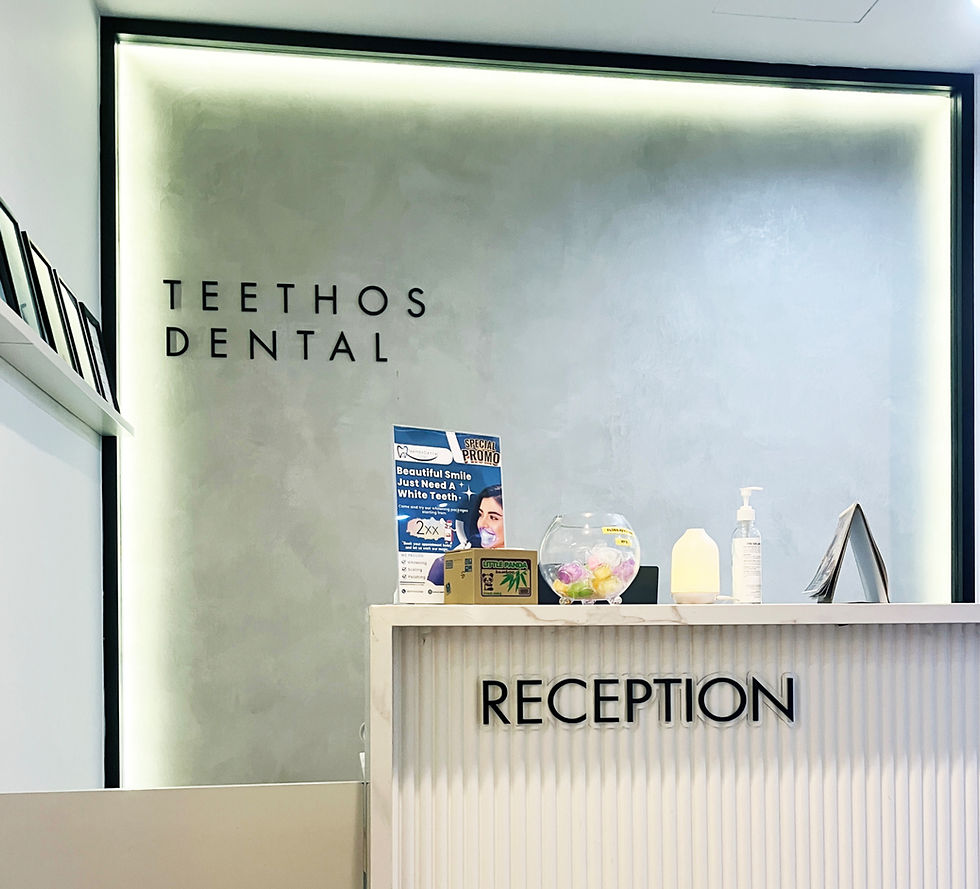
Teethos Dental is at 15A-1 Jalan Sultan, a short walk from Pasar Seni MRT in KL City Centre, and we are open daily including weekends and public holidays. Start with a consultation: we assess your gums and bone, explain your options, and give you an itemised written plan. For more complex surgical cases we have a visiting oral and maxillofacial surgeon, so please message us first and we will confirm availability.
If you are visiting from overseas, tell us your travel dates when you enquire so your treatment can be sequenced around your trip.
Dental implant FAQs
How much does a dental implant cost in Malaysia?
A single dental implant in Malaysia typically costs RM6,000 to RM13,000 per tooth, covering the implant post, abutment and crown. The final figure depends on the implant system, the crown material, and whether you need an extraction, bone graft or sinus lift first. Ask for an itemised quote after your examination and scan.
How long does the dental implant procedure take?
Placing the implant post usually takes about an hour per implant. The full process from placement to final crown typically takes 3 to 9 months, because the jawbone needs 3 to 6 months to fuse with the implant. A bone graft adds further healing time.
Is getting a dental implant painful?
The procedure is done under local anaesthetic, so you should feel pressure but not sharp pain. Afterwards, expect soreness and mild swelling for a few days, usually worst around day two or three. Severe or worsening pain after the first week should be checked by your dentist.
Can I get a tooth on the same day as my implant?
In selected cases a temporary tooth can be fitted on the day of surgery, but only when the bone is strong enough to hold the implant steady. In most cases the implant is left to heal first and the final crown is fitted afterwards.
How many dental visits does an implant need?
Most single-tooth implants need around four to six visits: consultation and scan, surgery, a healing check, impressions for the crown, and the final crown fitting. Extra visits are needed if you require an extraction or bone graft.
Who is not suitable for a dental implant?
Implants are generally not recommended while the jaw is still growing, or when gum disease, heavy smoking or poorly controlled diabetes have not been addressed. Thin bone does not always rule out an implant, because a bone graft can often rebuild it. A clinical assessment is the only reliable way to know.
Is a dental implant better than a bridge or a denture?
It depends on your teeth and your priorities. An implant replaces the tooth without grinding down neighbouring teeth and helps preserve jawbone, but costs more and takes longer. A bridge is faster and needs no surgery, and a denture has the lowest upfront cost, but neither supports the bone the way an implant does.
This guide is general information, not a diagnosis. Your timeline and cost depend on a clinical assessment of your teeth, gums and bone.


Comments